- Company Profile
Company Profile
-
Message
Read a message from President Yoshinobu Iwanami.
-
Our Philosophy
Read the Motto and PILLAR CORE VALUES of PILLAR GROUP and the Group Code of Conduct.
-
Company Data
View the company data of PILLAR
-
Directors and Executive Officers
Meet our Directors and Executive Officers.
-
History
Find out about PILLAR’s history as a developer of products delivering new value.
-
Group Network
View the locations of PILLAR GROUP in Japan and abroad.
-
Mother Factories that Underpin Our Business
Read about our mother factories with an integrated system from development to production.
-
Procurement
Read the Procurement Policy and Procurement Guidelines.
-
Quality
Find out about PILLAR’s approach to quality and read the Quality Policy.
-
Message
- Business Overview
Business Overview
-
Our Business
Our cutting-edge technologies are contributing to diverse fields, everything from semiconductor production and seismic isolation to IT.
-
Technology and R&D
In pursuit of new value, we are exploring novel materials and emphasizing R&D of next-generation technology.
-
Our Business
- Product Information
- Investor Relations
Investor Relations

-
Management Policies
- Message from the President
- Action to Implement Management that is Conscious of Cost of Capital and Stock Price
- Medium-term Management Plan “One2030”
- Disclosure Policy
- IR library Shareholder Information
- Financial Highlights Stock Quotes IR FAQ Agreement
-
Management Policies
- Sustainability
Sustainability

-
The Value Creation Process
Read about Value Creation Process at PILLAR
-
Materiality
Read about Materiality at PILLAR
-
PILLAR by the Numbers
A snapshot of PILLAR in numbers.
-
Environment
Read about environmental initiatives at PILLAR
-
Social・Human resources
Read about social and human resources initiatives at PILLAR
-
Governance
Read about our corporate governance.
-
External Evaluations and Activities
Find out about external evaluations and activities.
-
Integrated Report
Read our integrated report.
-
Greenbond
Read about our greenbond activities.
-
The Value Creation Process
- Inquiries
Inquiries

-
Inquiries about Our Products
Inquiries about Our Products
-
Inquiries about Investor Relations
Inquiries about Investor Relations
-
Inquiries about Our Products
Information Disclosure based on the TNFD recommendations
In recent years, loss of natural capital and biodiversity has rapidly gained attention as a global risk, making the transition to nature-positive*1 activities an urgent issue. At the PILLAR Group, which uses a variety of chemicals in the manufacturing process, we recognize that our environmental impact cannot be underestimated, long addressing issues related to natural capital and biodiversity as one of our materialities.
Furthermore, we believe that our material development expertise and fluid control solutions developed since our founding can contribute to social needs aimed at achieving a nature-positive goal. Along with reducing the Group’s environmental impact, creating new business opportunities by utilizing these technological capabilities is one of our key business strategies.
Against this backdrop, we conducted an analysis and assessment of nature-related dependencies, impacts, risks, and opportunities (hereinafter, “nature-related issues”). Based on these results, we herein disclose information regarding our Group’s governance, risk and impact management, strategy, indicators, and targets in accordance with the Recommendations of the Taskforce on Nature-related Financial Disclosures (hereinafter, “TNFD Recommendations”). Going forward, through these initiatives, we will deepen dialogue with our stakeholders and drive efforts toward being nature-positive.
*1: “Nature-positive” refers to halting and reversing biodiversity loss and achieving restoration. The 2022 Kunming-Montreal Global Biodiversity Framework sets the mission of achieving a nature-positive state by 2030.
Governance
■Positioning of Initiatives Related to Natural Capital and Biodiversity
Recognizing the conservation of natural capital and biodiversity as a critical social issue, the Group has long identified “Prevention of chemical pollution and conservation of water resources” and “Biodiversity conservation” as materialities, making steady progress in our initiatives.
Starting in fiscal 2025, we have been advancing identification and assessment of nature-related issues in line with the principles of the TNFD Recommendations. Moving forward, we are committed to further strengthening risk treatment and nature-positive initiatives based on these results.
■Governance Structure
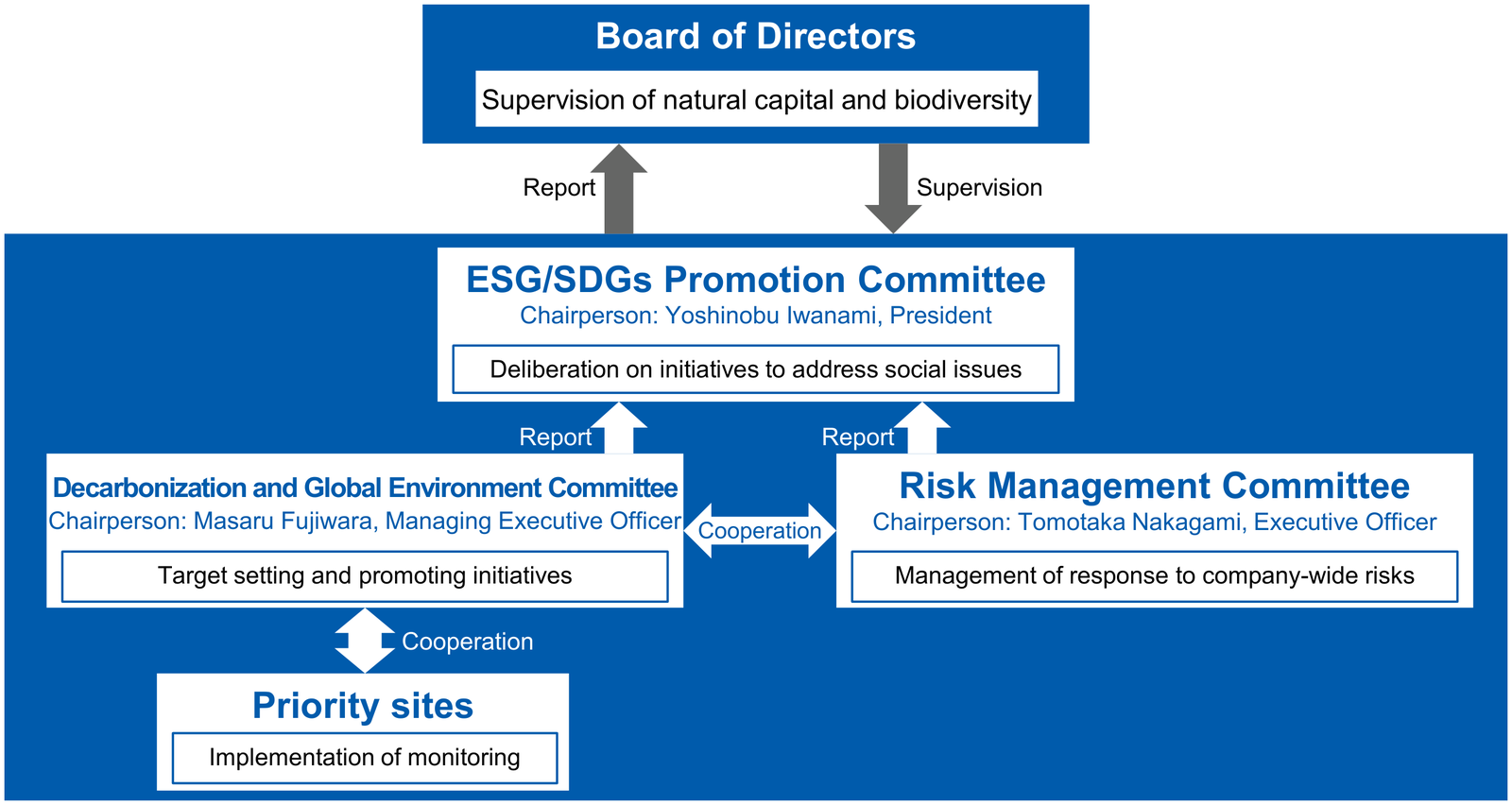
Our Group has established the ESG/SDGs Promotion Committee as the body that stands above various sustainability-related committees, including climate change and nature-related issues. With regard to climate change and nature-related issues, this Committee is responsible for deliberating on basic policies and targets formulated by the Decarbonization and Global Environment Committee, a subordinate body, as well as monitoring progress toward achieving said targets.
The Board of Directors’ Supervisory Responsibilities
Positioning nature-related issues as key management challenges, the Board of Directors assumes the following supervisory responsibilities.
- • Final approval of strategies and targets for nature-related issues
- • Monitoring and supervision of nature-related issues
- • Regular review of progress toward nature-related indicators and targets
ESG/SDGs Promotion Committee
The President chairs the ESG/SDGs Promotion Committee and holds the highest level of responsibility and authority in handling nature-related issues. The Committee is composed of the chairs of sustainability-related committees and the heads of key corporate departments, able to address nature-related issues from a company-wide perspective. The Committee meets quarterly, in principle, and deliberation results are regularly reported to the Board of Directors.
The Committee’s roles regarding nature-related issues:
- • Formulating and promoting sustainability strategies that include nature-related issues
- • Monitoring the status of nature-related issue management
- • Setting nature-related targets and monitoring progress toward achieving them
- • Company-wide decision making in dealing with nature-related issues, etc.
Decarbonization and Global Environment Committee
The Decarbonization and Global Environment Committee is chaired by a managing executive officer and comprises representatives from each business division. The duties of the Committee include the following:
- • Setting targets for nature-related issues
- • Collecting, analyzing, and evaluating nature-related data
- • Promoting and coordinating responses to nature-related issues in each business division
- • Identifying nature-related issues and considering countermeasures
The Committee meets quarterly, and its activity details and progress are reported to the ESG/SDGs Promotion Committee.
■Framework for Responding to Local Communities and Stakeholders
We are aware that local communities play an indispensable role in the conservation of natural capital and biodiversity, and that in order to reliably identify, assess, and manage nature-related issues, we need to solidify our relationships with local communities more than ever. In this context, we plan to enhance our engagement in nature conservation in collaboration with local communities and other stakeholders. Furthermore, in light of the interconnection between nature and human rights as emphasized by the TNFD, we will put in place systems aligned with our Group Human Rights Policy to ensure that the local communities where our Group operates, as well as their entrenched cultures and industries, can continue to benefit from nature.
Risk and Impact Management
■Risk and Impact Management Framework
At our Group, the Decarbonization and Global Environment Committee takes the lead in managing nature-related risks and impacts in collaboration with sites specified as priority locations mentioned later. This Committee is responsible for identifying and assessing nature-related issues, as well as compiling monitoring results in priority locations, as well as reporting to the ESG/SDGs Promotion Committee on a quarterly basis. Overall, integrated risk management is overseen by the Risk Management Committee, which builds and operates a company-wide risk management system that also covers nature-related risks. These two committees and relevant sites coordinate closely with each other, with the aim of making our response to nature-related issues more effective.
Risk Management Committee
The Risk Management Committee is chaired by an executive officer and comprised of the heads of business divisions. To step up risk management, the Committee has the following responsibilities:
- • Regular identification, analysis, and assessment of significant risks, and formulation of risk mitigation measures
- • Regular review of risk mitigation measures and discussion on corrective actions
- • Consideration of measures in response to the materialization of significant risks, as well as measures to prevent recurrence
- • Reporting to the Board of Directors
The Committee meets four times annually and reports nature-related risk management and progress status to the ESG/SDGs Promotion Committee.
■Process for Identifying, Assessing, and Managing Dependencies, Impacts, Risks, and Opportunities
Identification and assessment process
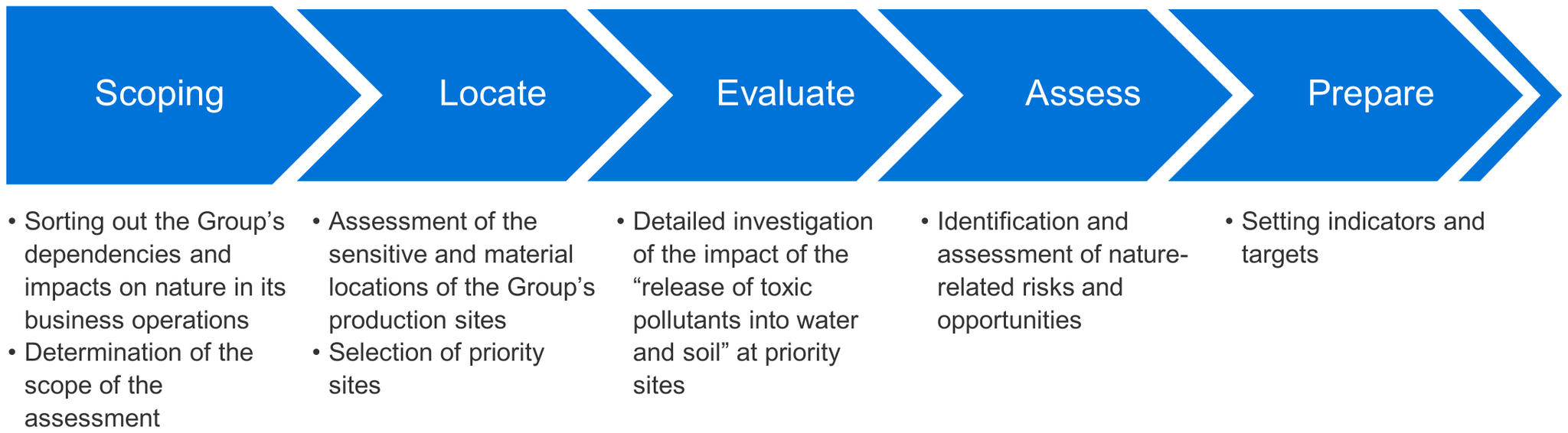
Under the leadership of the Decarbonization and Global Environment Committee, our Group conducts a series of processes at least once a year, including identification and assessment of material nature-related issues.
For identification and assessment, we utilize the LEAP approach recommended by the TNFD. The disclosures below are based on an assessment in the scope of our Group’s direct operations; however, we will consider expanding the scope of analysis in the future.
Furthermore, as part of these processes, our Group identified “release of toxic pollutants into water and soil” as a material impact driver, as described below, and conducted analysis with a focus on this factor in the “Evaluate” phase at the site level.
Monitoring Risks and Opportunities
Identified material nature-related risks and opportunities are monitored in a timely manner at relevant sites using the KPIs listed in the “Indicators and Targets” section at the bottom of this page, and the Decarbonization and Global Environment Committee compiles the results. The monitoring results are reported quarterly to the ESG/SDGs Promotion Committee, which reviews countermeasures as needed.
Integration with the Company-wide Risk Management Process
Material nature-related risks and opportunities identified through cooperation and consultation between the Risk Management Committee and the Decarbonization and Global Environment Committee are integrated into the company-wide risk management process. Material nature-related risks are incorporated into the company-wide risk map, and risk mitigation measures are reflected in the Medium-Term Management Plan and annual business plans. Alignment with the company-wide sustainability strategy is ensured through regular reporting to the ESG/SDGs Promotion Committee.
Strategy
Under the Risk and Impact Management framework and processes described above, our Group is reinforcing its analysis of and response to identified material nature-related issues and expanding the disclosure of related information.
■Dependencies and Impacts
Our Group has organized and understood dependencies and impacts on nature resulting from our business operations as outlined in the table below. This table presents an analysis of the dependencies and impacts on nature resulting from the Group’s business activities (direct operations) in the Electronic Equipment Business and Industrial Equipment Business, respectively. Also included are dependencies and impacts resulting from the business activities of Tier-1 suppliers (upstream) with whom we have direct business relationships and direct customers (downstream), using ENCORE (Exploring Natural Capital Opportunities, Risks, and Exposure), a tool developed by Global Canopy, UNEP FI, and other factors.
The analysis revealed that the impact of the “release of toxic pollutants into water and soil” matters for direct operations, upstream and downstream for both businesses.
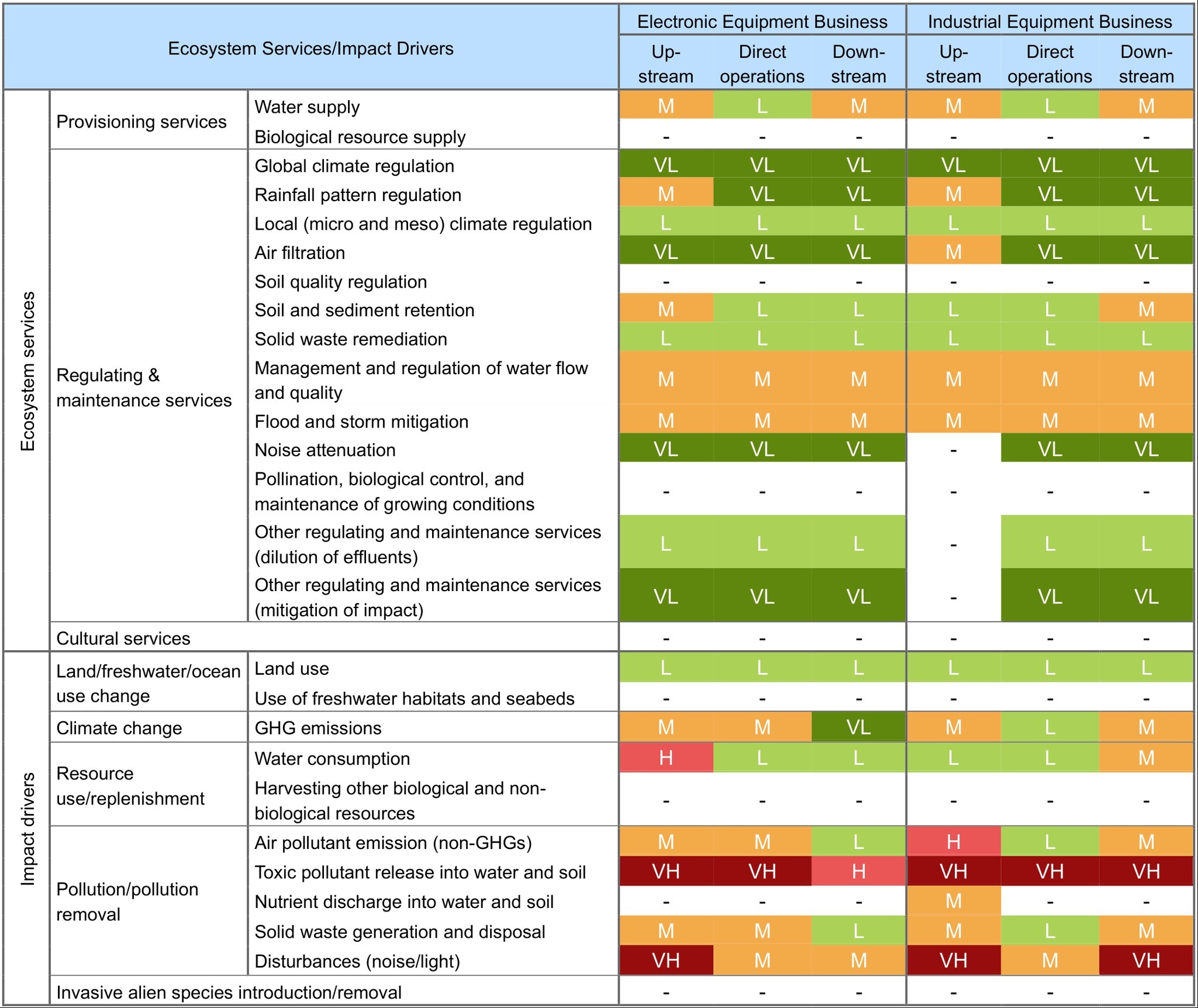
*The degree of dependency on each ecosystem service and the significance of impact drivers are rated on a five-point scale: VH (Very High), H (High), M (Medium), L (Low), and VL (Very Low). A “-” indicates no relevance with our business operations or insufficient data for evaluation.
■Identifying Material Risks and Opportunities
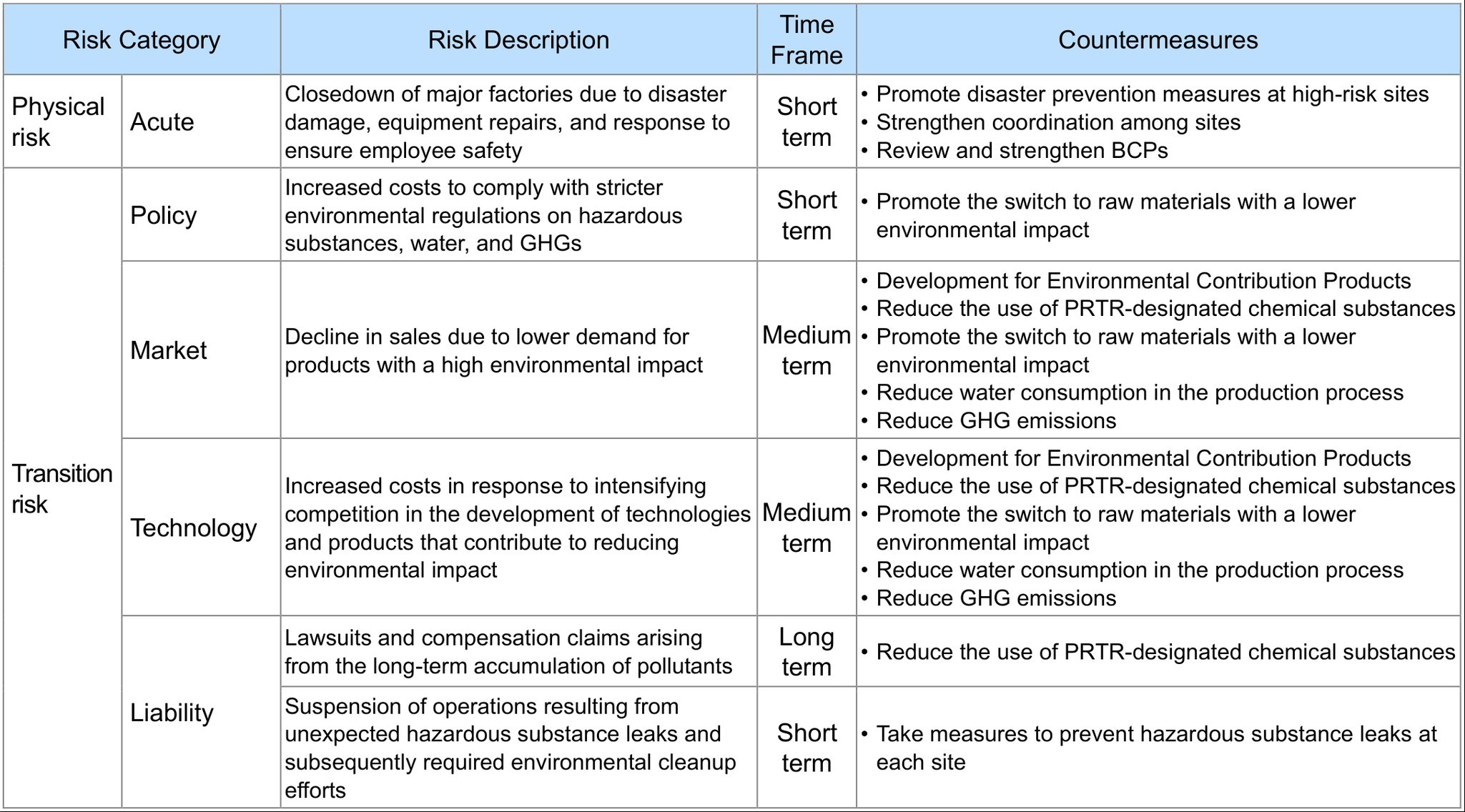
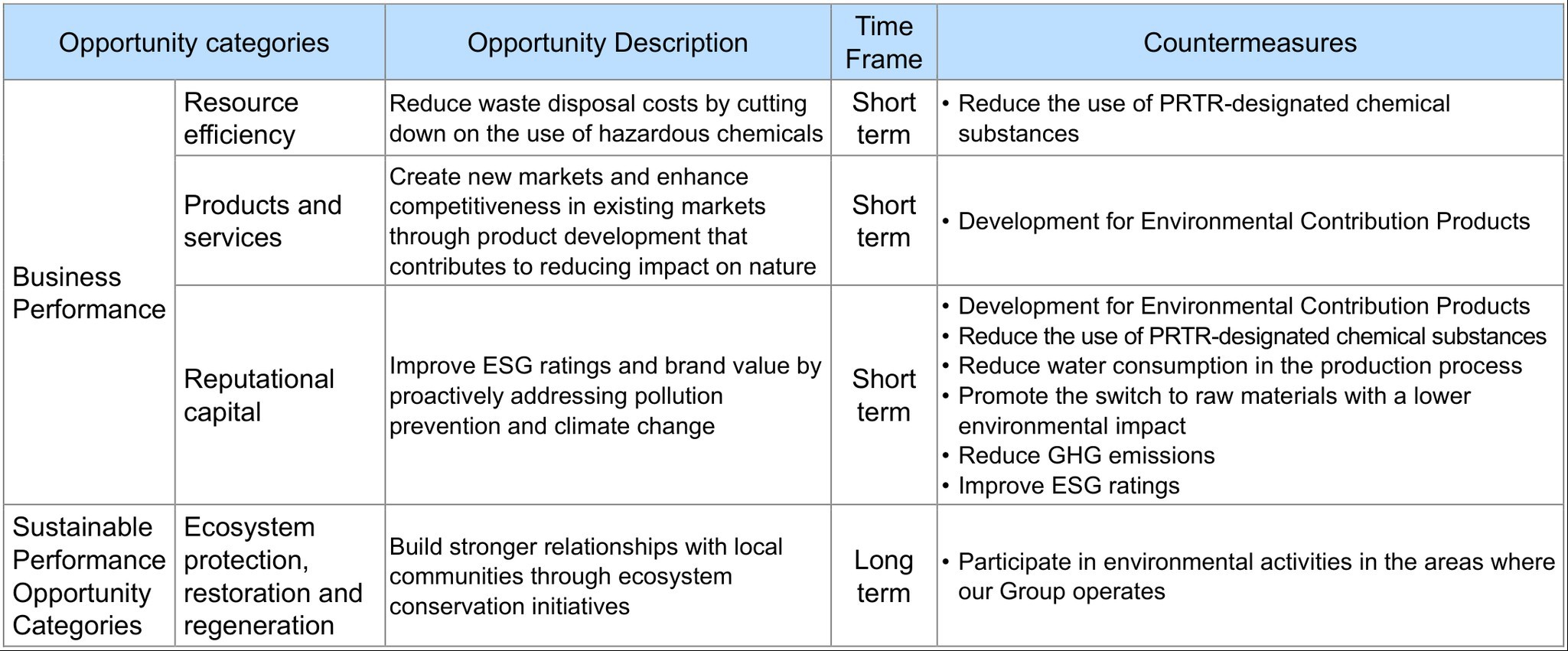
Based on the results of our analysis of nature-related dependencies and impacts, our Group has assessed and identified material risks and opportunities as outlined in the table below.
At the assessment and identification phases, we drew on nature-related scenarios recommended by the TNFD to prepare two scenarios: for physical risks, a “world experiencing rapid degradation of ecosystem services,” and for transition risks, a “world of rapid changes in policies, regulations, and markets to conserve ecosystem services.” We then sorted out the risks and opportunities implied by these scenarios and selected those assessed as significant due to their “likelihood” and “degree of impact.” The time frame definitions are: short-term (within 3 years), medium-term (over 3 years but not more than 10 years), and long-term (over 10 years).
[Material Nature-Related Risks Our Group Is Facing]
[Material Nature-Related Opportunities in Our Group’s Businesses]
■Contributions to the Natural Environment Our Group’s Products Make
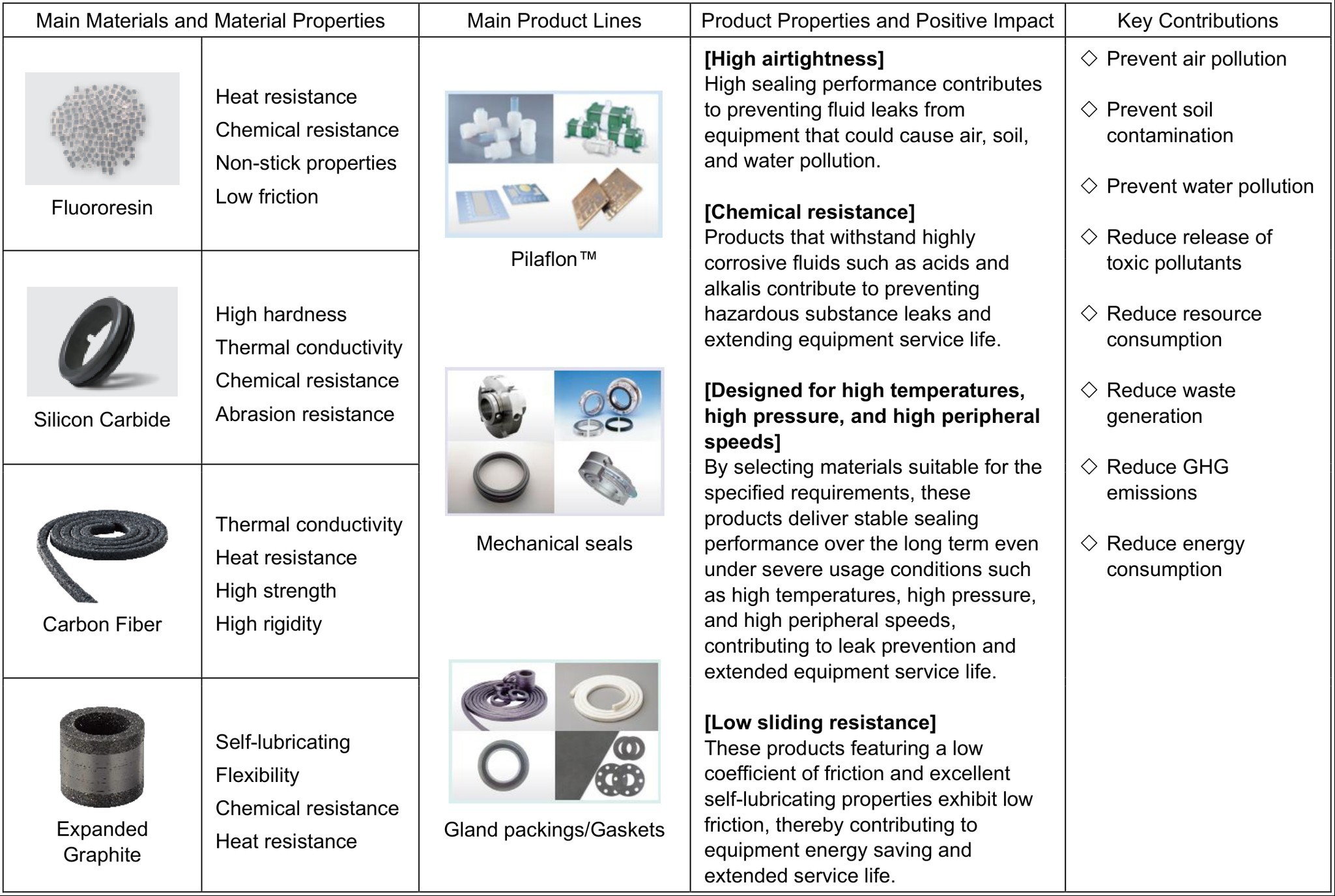
Many of our Group’s products capitalize on material properties to help prevent hazardous substance leaks and reduce resource consumption; these products are summarized here as specific examples of “Products and services,” an opportunity category listed above. These products and technologies are beneficial in lowering impact on nature across the entire value chain, and we also regard them as important business opportunities for meeting social needs in becoming nature-positive.
[How Our Group’s Products Contribute to the Natural Environment]
■Identification and Status of Priority Locations
We have identified three Group production sites as “priority locations,” where we will intensively monitor nature-related issues and proactively implement countermeasures.
In the identification process, we considered two factors: the vulnerability of the natural environment in each regional location (sensitive locations) and the material impact of our business operations (material locations). The results of the sensitive location analysis found seven sites with slightly higher water risks, along with sites located near sanctuaries and similar areas. Among these sites, taking into account the scale of our businesses and the materiality of their impacts, we have identified three domestic sites (the Sanda Factory, Fukuchiyama Factory, and Kyushu Factory) with high usage of toxic pollutants, such as chemicals, as immediate priority locations. We will continue monitoring these priority locations and implement countermeasures while moving forward with our initiatives from the perspective of sensitive locations. (Please see the Group Network for the locations of each site.)
Sanda Factory
Sanda Factory, one of our mother factories, produces mechanical seals, gland packings, gaskets, and other products for the industrial equipment market. Sanda City, Hyogo, where this factory is located, is an industrial region centered on the manufacturing sector, while also being rich in nature, with farmland making up 20% of the city area. We obtained ISO 14001 certification in September 1999 and have been working extensively to convert our products to non-asbestos, as well as reduce the use of Class 1 designated chemical substances under the PRTR system, such as lead. In March 2020, the factory underwent renovation work. Furthermore, to minimize the impact of our operations on the local natural environment and agriculture, a major regional industry, we have been pruning trees near our property boundaries and conducting cleanup activities in the neighborhood.
Fukuchiyama Factory
This is our Group’s main factory producing Pilaflon™ products, such as fittings and pumps for semiconductor and LCD manufacturing equipment, primarily for our electronic equipment business. Continuous expansion is being planned. Nearby, the Yura River flows, known as a pristine stream where salmon swim upstream. The Fukuchiyama Factory obtained ISO 14001 certification for Factory No. 1 in September 2002 and for Factory No. 2 in August 2024; Factory No. 2 was also awarded the highest “S” rank in CASBEE (Japan’s green building rating system). In addition, as the Fukuchiyama Factory’s usage of chemical substances is among the highest in the region and poses a potential risk associated with the “release of toxic pollutants into water and soil,” we are switching to a cleaning method that does not use organic solvents in part of our manufacturing process.
Kyushu Factory
The Kyushu Factory produces fittings and tubes for semiconductor and LCD manufacturing equipment in our electronic equipment business. Situated in a fertile rural area within the Koshi River basin, there is a section designated as a National Natural Monument as the habitat of Chisujinori, a freshwater algae species endemic to Japan. Similar to the Fukuchiyama Factory, the Kyushu Factory is also switching to a cleaning method that does not use organic solvents in part of its manufacturing process.
■Business Strategy Based on Dependencies, Impacts, Risks, and Opportunities
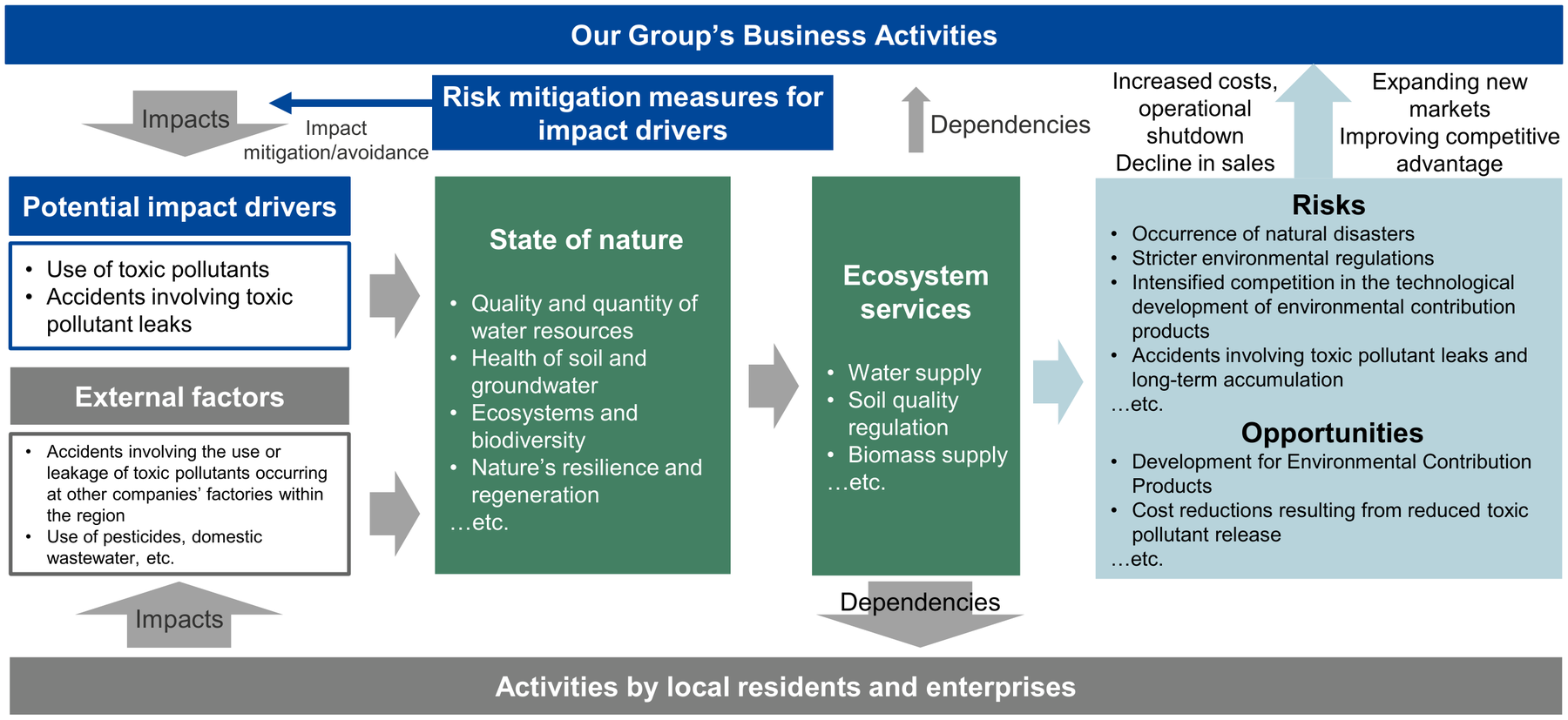
The interdependency and impact between our Group’s business activities and nature are summarized in the diagram below, as well as the resulting risks and opportunities. Should an accident such as a leak of toxic pollutants occur, it could exert a particularly significant impact on local industries such as agriculture through water and soil contamination in the region. In addition, it would pose business risks to our Group in the form of increased costs, operational shutdown, and decline in sales. At the same time, if the development and sales expansion of environmental contribution products progress as we tackle these nature-related issues, this will lead to opportunities such as expanding new markets and improving competitive advantage. Based on this, we will advance efforts to mitigate and avoid impact, also incorporating the creation of opportunities connected to nature-related issues into our business strategy to move forward with the following initiatives.
[Key Initiatives to Mitigate Impact and Create Opportunities]
- • Development and sale of environmental contribution products
- • Reducing the use of PRTR-designated chemical substances
- • Promoting the switch to raw materials with lower environmental impact
- • Reducing water consumption in the production process
- • Strengthening business continuity plans (BCPs) at our key sites
- • Enhancing engagement with suppliers
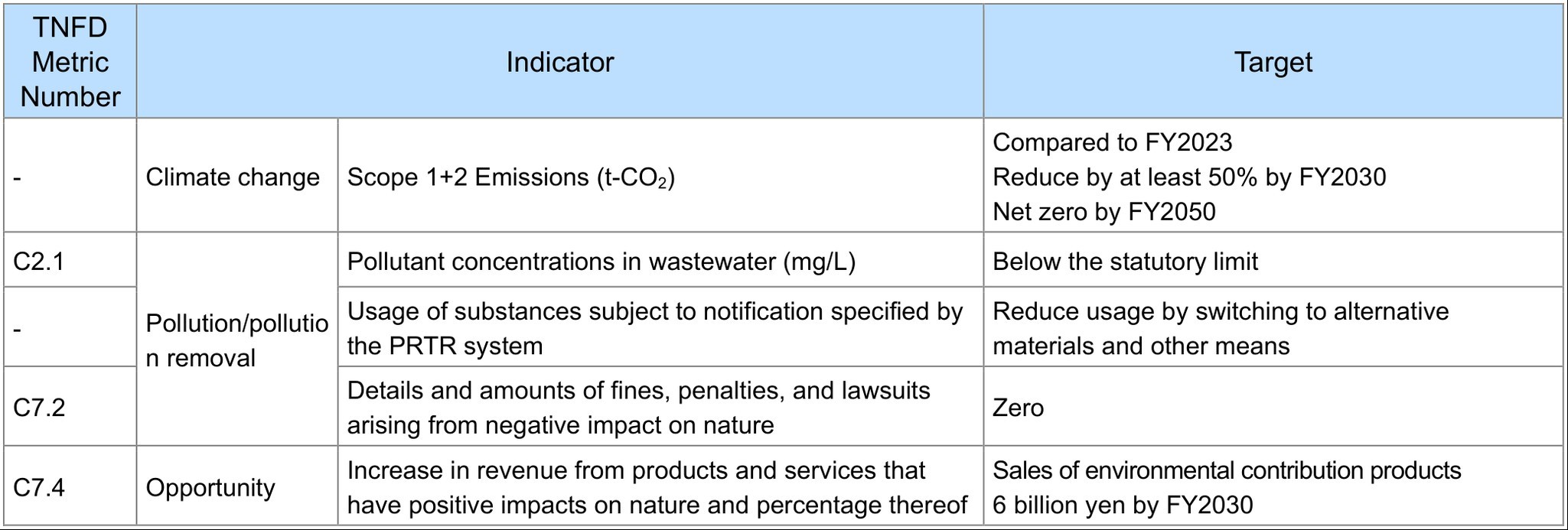
Indicators and Targets
In order to manage the identified nature-related issues, our Group has adopted the following indicators as monitoring metrics, drawing on TNFD-recommended core global disclosure metrics. Going forward, we will continue to track the achievement status of our targets while seeking to expand indicators.